
Imagine this: You’re about to place a bet on your favorite team, feeling confident about their chances. You quickly glance at one bookmaker, see odds that seem reasonable, and place your wager. But what if, unbeknownst to you, another bookmaker was offering significantly better odds for the exact same bet? That’s the reality of the betting world – a landscape where odds can vary wildly from one platform to another.
I remember once nearly missing out on a HUGE payout because I was too hasty. I spotted odds I liked, but a friend pointed out another bookie that was paying out considerably more. Always compare!
This isn’t just about finding slightly better prices; it’s about consistently identifying value bets and maximizing your potential profits. This article serves as your guide to mastering the art of betting odds comparison. We’ll arm you with the knowledge and strategies to navigate the world of odds comparison, ensuring you never leave money on the table. We want to help you start profitable betting using these expert tips every time you place a bet.
Understanding Betting Odds
Navigating the world of betting can feel like learning a new language, especially when you’re faced with different types of betting odds. Understanding these odds is crucial, not just for knowing how much you could win, but also for assessing the true value of a bet. There are three primary formats you’ll encounter: Decimal, Fractional, and American. Each represents the same probability, just in a different way. The trick is learning how to convert between them and, more importantly, how to understand the implied probability they represent. This knowledge empowers you to make smarter, more informed betting decisions.
Decimal Odds
Decimal odds, also known as European odds, are perhaps the easiest to understand. They represent the total return you’ll receive for every unit wagered, including your stake. So, a decimal odd of 2.50 means that for every $1 you bet, you’ll receive $2.50 back if you win. This includes your initial $1 stake. To calculate your profit, simply subtract 1 from the decimal odd (2.50 – 1 = 1.50). Therefore, your profit is $1.50 for every $1 wagered. For example, if you bet $10 on an outcome with decimal odds of 2.00 and win, you would receive $20 in total (your $10 stake back plus $10 profit).
Fractional Odds
Fractional odds, commonly used in the UK, represent the profit you’ll receive relative to your stake. For instance, odds of 5/1 (read as “five to one”) mean that you’ll win $5 for every $1 you stake, in addition to getting your stake back. So, if you bet $10 at 5/1 and win, you’d receive $50 profit plus your $10 stake back, totaling $60. To convert fractional odds to decimal odds, divide the first number by the second and add 1. In the example of 5/1, 5 divided by 1 is 5, plus 1 equals 6.00 in decimal odds.
American Odds
American odds, also known as moneyline odds, are slightly different. They are expressed as either positive or negative numbers. Positive odds indicate the amount of profit you would win on a $100 wager. For example, odds of +200 mean you would win $200 profit on a $100 bet, plus your $100 stake back. Negative odds, on the other hand, indicate the amount you need to wager to win $100 profit. For example, odds of -150 mean you need to bet $150 to win $100 profit, plus your $150 stake back. Converting American odds to decimal odds requires a bit more calculation. For positive odds, divide the odds by 100 and add 1. For negative odds, divide 100 by the absolute value of the odds and add 1.
Why Comparing Odds is Crucial
Imagine placing the same $100 bet every week for a year. If you consistently settle for odds of 2.0, you’d see a $100 profit per winning bet. However, if you dedicated a few minutes to odds comparison and found better odds – say, 2.2 – you’d increase your profit to $120 on each winning bet. That seemingly small difference of 0.2 adds up significantly across 52 weeks. Even if only half of your bets win, comparing odds would net you an extra $520 over the year. This illustrates a simple but powerful fact: odds comparison benefits your bottom line.
The core of successful betting lies in consistently securing the best possible value. It’s not just about picking winners; it’s about maximizing your return on investment for each winning bet. A well-thought-out betting strategy includes odds comparison as a cornerstone. This habit, over time, translates into substantial long-term profitability. Think of it as squeezing every last drop of potential out of every wager you place. Don’t leave money on the table. Smart bettors compare odds; that’s how they stay ahead.
Small Differences, Big Impact
Let’s say you’re eyeing a football match. One bookmaker offers odds of 1.8 on a particular outcome, while another offers 1.95. On a $50 bet, choosing the higher odds would give you an extra $7.50 in profit if you win. It might not sound like a huge sum. But imagine making ten similar bets every week. Those small differences quickly compound, potentially adding hundreds or even thousands of dollars to your return on investment over a year. This highlights that even small odd differences can have a big impact.

Factors Influencing Betting Odds
Bookmakers Margin (Vigorish)
The bookmaker’s margin, often referred to as the vigorish or “vig,” is essentially a commission charged by bookmakers on every bet. It’s how they ensure profitability regardless of the outcome of a sporting event. This margin is built into the odds, subtly reducing the payout a winning bettor receives compared to the true probability of the event. For example, a perfectly fair coin flip should offer odds of 2.0 (or even money) for both heads and tails. However, a bookmaker might offer odds of 1.90 on each outcome. That difference represents their vigorish. Savvy bettors understand that the lower the vigorish, the better the value they’re getting, and actively seek out bookmakers offering the most competitive margins.
Tools and Resources for Odds Comparison
To maximize your betting potential, it’s crucial to leverage the right tools and resources for efficient odds comparison. Several options are available, including specialized odds comparison websites, convenient mobile apps, and innovative betting exchanges. Understanding how to use these tools effectively can significantly improve your chances of securing the best possible odds.
Odds Comparison Websites
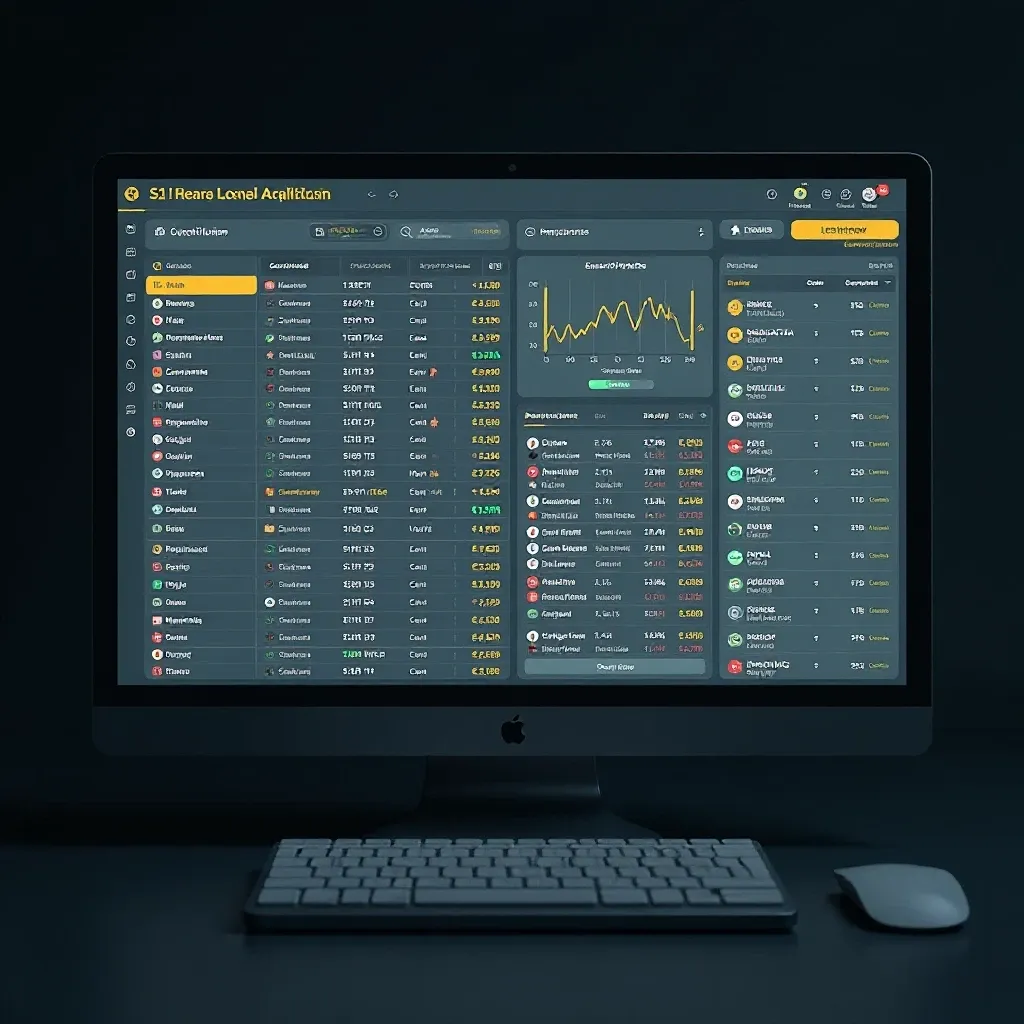
Odds comparison websites are invaluable resources that aggregate odds from multiple bookmakers in one place. This allows you to quickly identify which bookmaker is offering the most favorable odds for a specific bet. Some of the popular choices include Oddschecker, Oddsportal and Easy Odds. These websites typically offer filters to refine your search by sport, league, and bet type, ensuring you can pinpoint the best value bets with ease. These platforms are a vital first stop when looking to make informed betting decisions.
Mobile Apps
For bettors on the go, mobile apps provide a convenient way to compare odds and place bets from anywhere. Numerous betting apps incorporate odds comparison features, streamlining the process and saving time. Some well-regarded options include the Bet365 app, the William Hill app, the Ladbrokes app, the Coral app, and the Sky Bet app. These apps allow you to compare odds across different bookmakers, set alerts for specific odds, and place bets directly from your mobile device, making them essential tools for the modern bettor. Always ensure you are using reputable apps to protect your data and funds.
Betting Exchanges
Betting exchanges offer a different approach to traditional bookmakers by allowing users to bet against each other. This peer-to-peer betting model can often result in better odds than those offered by conventional bookmakers. Notable examples of betting exchanges include Betfair and Smarkets. These platforms allow you to “back” (bet on something to happen) or “lay” (bet against something happening), giving you more control over your bets. While they might seem complex initially, betting exchanges can be incredibly rewarding for those seeking better value and more sophisticated betting strategies.
Advanced Strategies for Finding Value
Arbitrage Betting (Arbing)
Arbitrage betting, often called “arbing,” is a sophisticated strategy that exploits differences in odds offered by various bookmakers on the same event. Essentially, you’re placing bets on all possible outcomes of an event across different platforms to guarantee a profit, regardless of the result. This hinges on identifying discrepancies where the combined odds allow for a return exceeding the total stake. For instance, if one bookmaker offers high odds for Team A to win, while another offers equally high odds for Team B, an arber can bet on both, securing a profit due to the imbalanced odds distribution. Effective arbing requires swift action and access to multiple bookmaker accounts, as these opportunities are fleeting and odds can shift rapidly. Advanced software and odds comparison tools are invaluable assets for any aspiring arbitrageur, helping to pinpoint these lucrative, yet often complex, situations.
Matched Betting
Matched betting operates on the principle of leveraging bookmaker promotions, like free bets and bonuses, to create risk-free profit. Using odds comparison websites is crucial for this strategy. Firstly, a bettor places a ‘qualifying bet’ with a bookmaker to unlock a free bet. Then, they place another bet against the initial selection (a ‘lay bet’) at a betting exchange. By carefully calculating the stake for the lay bet, guided by odds comparison, the bettor can minimize any potential loss from the qualifying bet. The free bet is then used in a similar fashion – placing a back bet and a corresponding lay bet. Since the stake for the free bet isn’t the bettor’s money, the process guarantees a profit, regardless of the outcome. Matched betting demands meticulous attention to detail and a thorough understanding of promotional terms and conditions.
Identifying Steam Moves
Spotting steam moves can be a valuable skill for any bettor looking to capitalize on market inefficiencies. A steam move signifies a sudden, substantial, and uniform shift in the odds of a particular betting market across numerous bookmakers. This usually indicates that a significant amount of money has been placed on one side of the bet, potentially triggered by news, insider information, or expert analysis. Monitoring odds across multiple platforms in real-time is essential for identifying steam moves. When a steam move is detected, there are two schools of thought: some believe that following the steam can lead to profit, assuming the initial surge was based on solid information. Others argue that steam moves often correct themselves as bookmakers adjust their odds, so fading the steam (betting against the direction of the move) might be a more profitable strategy. Either way, understanding and identifying steam moves requires a keen awareness of market dynamics.
Common Mistakes and How to Avoid Them
Diving into the world of odds comparison can feel like striking gold, but it’s easy to stumble if you’re not careful. Many bettors, eager to maximize their potential winnings, fall into common traps that can quickly eat into their profits.
One frequent betting mistake is fixating solely on the highest odds displayed on an odds comparison site, without considering liquidity. A bookmaker might offer tempting odds, but if they only allow a tiny wager, those superior odds become practically worthless. Before getting too excited about seemingly great odds, it’s important to learn to check how much money you can actually bet at those odds. Often, those really good odds are available for very limited stakes.
Another pitfall is turning a blind eye to bookmaker limits. Imagine finding incredible odds, only to discover that the bookmaker restricts your maximum bet to a pittance. This can be frustrating, especially if you had planned a larger wager. Always double-check the bookmaker’s limits before committing.
For those venturing into international betting markets, failing to account for currency conversion fees is a classic mistake. These fees, often hidden in the fine print, can significantly reduce your winnings. Make sure you factor these costs into your calculations to get a true picture of your potential profit.
Finally, resist the urge to chase losses. It’s a slippery slope where desperation clouds judgment. Stick to a pre-defined betting strategy and bankroll management plan. If a bet goes south, accept it and move on to the next opportunity, without letting emotion dictate your decisions.
Conclusion
In summary, odds comparison is not just a superficial task; it’s the bedrock of profitable betting. Consistently seeking out the most favorable odds across different bookmakers, understanding implied probability, and recognizing value are the cornerstones of a winning betting strategy. The ability to discern discrepancies and capitalize on them separates the informed bettor from the casual gambler.
The journey to becoming a consistently profitable bettor requires dedication and a willingness to learn. Implementing the strategies discussed, from understanding different odds formats to utilizing odds comparison tools, is a crucial first step. The world of sports betting is complex and ever-changing, but mastering the art of odds comparison equips you with a fundamental skill that transcends specific sports or betting markets.
The potential for success is within reach for those who commit to the process. By embracing odds comparison as a core element of your betting approach, continuously refining your understanding, and staying informed, you significantly increase your chances of long-term profitability and enjoyment in the exciting world of sports betting.